
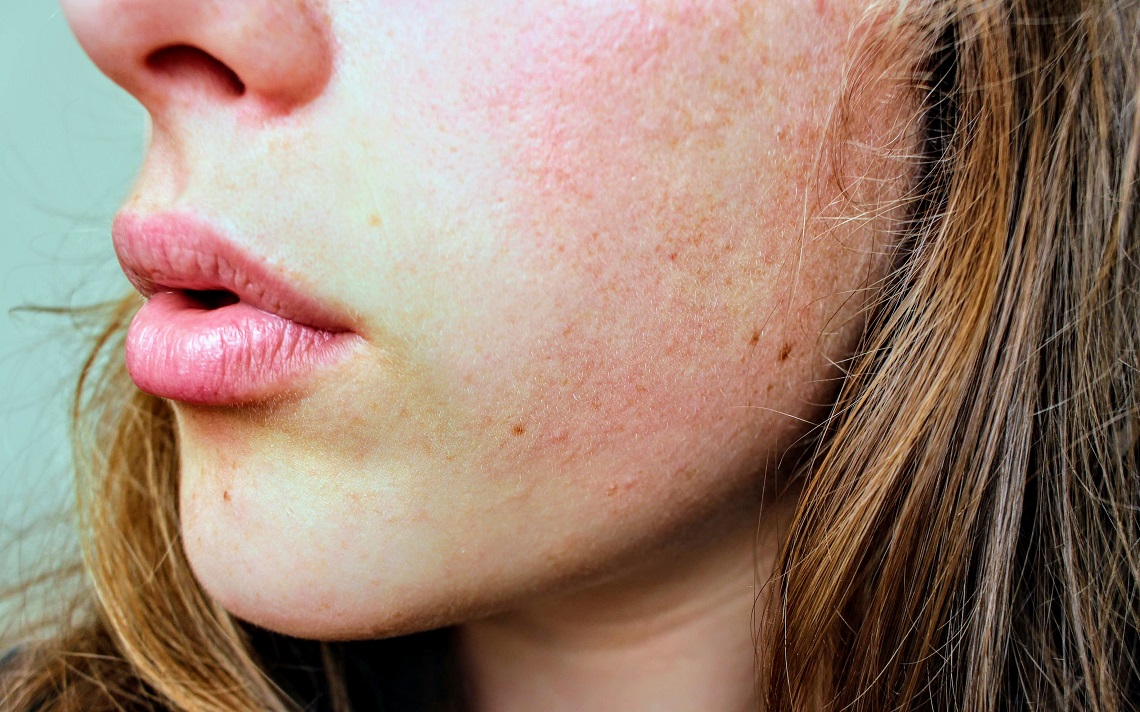
There are many types of skins and we all want to get the best version of ours. The problem is that not everyone can use the same products or the same strategy to get 100% of our skin, so we are going to give you some tips to identify your skin type and adapt the care to it.

To know our skin type we must look at it when it is clean. We cannot evaluate it if it has any products because we need to know how it behaves when it is naked. Therefore, the first step is to clean the skin and after a few hours, we look in the mirror at the changes it has undergone such as shiny (most often in the T-zone), redness, dryness (feeling of tightness when making faces), rough texture…
Once we know our skin’s imperfections, it is time to start working on improving it. Skin types can be divided into these 5 main groups: normal, dry, oily, mixed, and sensitive.
Normal skin
It has few pores, pimples, and imperfections. No tightness in the way he gestures. It is a skin that admits practically all types of active ingredients as it will not be easily irritated. It does not usually have sudden changes, a pimple or an imperfection can appear punctually, but it is easy to solve.
The makeup settles well on this type of skin.
Dry skin
The skin is dull, rough, and tight. This is because the sebaceous glands secrete less oil than normal skin. The reason for this dryness can be given by several factors such as genetics, climate, or medications. In addition, people with this type of skin are more likely to get small wrinkles and flakes (it is convenient to exfoliate the skin once a week, to eliminate that layer of dry dead cells).
These skins are treated with moisturizing creams or oils to provide that juicy touch. Winter tends to dry out this type of skin even more, so in this season some extra hydration should be added.
Makeup tends to crack when it has been applied for a few hours because the skin absorbs the water in the formula, so makeup should be used to provide moisture as well. Stick foundation is ideal for this type of skin.
Oily skin
Oily skin is characterized by a shiny appearance, oily feel, and large pores. Unlike dry skin, the sebaceous glands secrete excess oil and as a result we get those shiny and acne outbreaks by clogging the pores. They are the most difficult to treat and often require treatment under medical supervision.
But not everything will be bad because these skins will notice later the first symptoms of skin aging.
Makeup usually lasts less than in other types of skin, so we recommend mattifying or powdered bases to absorb excess sebum and not to leave shine.
Mixed skin
The face looks balanced, similar to normal skin, but glows in some specific areas (especially the nose, forehead, and chin) and flaking or dryness may also occur in the cheek area.
It is common for this type of skin to have blackheads in the oily areas that can be treated with a mild cleanser that is not aggressive to the dry areas. This is the most common type of skin.
Sensitive skin
Sensitive skin reddens very easily and may also feel irritated or itchy. They often suffer from eczema, rosacea, or allergies.
They are thin skins with small pores and flush easily from external agents (such as cold) or from facial care products (avoid products with alcohol or perfumes because they cause irritation).
There are specific dermatological products for this type of skin because they need soft formulations to respect the skin.
Have you identified yourself with any of these skin types? Tell us in the comments what routine you follow to keep your skin in check.


